
More than a Method: Montessori's Vision for Humanity
January 13, 2026

At the heart of Montessori education is a deep respect for human potential.
Honoring the Human Potential at Coastal Sage Montessori

At Coastal Sage Montessori, we believe education is not something done to a child, but something that unfolds within them. This belief is rooted in Dr. Maria Montessori’s profound discovery: when children are given an environment that truly respects their developmental needs, they reveal remarkable potential, clarity of focus, independence, joy, and deep intelligence.

Dr. Montessori began her work not as a traditional educator, but as a physician and scientist. While working with children who had developmental delays, she observed that they did not need correction they needed opportunities. She crafted precise materials, offered meaningful work, and removed obstacles. The result was extraordinary growth. From that moment forward, Montessori education became a study of human potential.


A Scientific Approach to Childhood

Dr. Montessori approached childhood with curiosity and respect. Through years of observation, she identified universal patterns of growth, now known as the Planes of Development, and the Human Tendencies that drive all humans to learn, adapt, and connect. These tendencies are not taught; they belong to us. The drive to explore, to create order, to communicate, to perfect one’s work...these are the quiet, internal engines of human development.

At Coastal Sage Montessori, these principles live within every classroom. We do not ask children to conform to a system; we prepare a system that meets the child where they are at.


Education Aligned With Nature

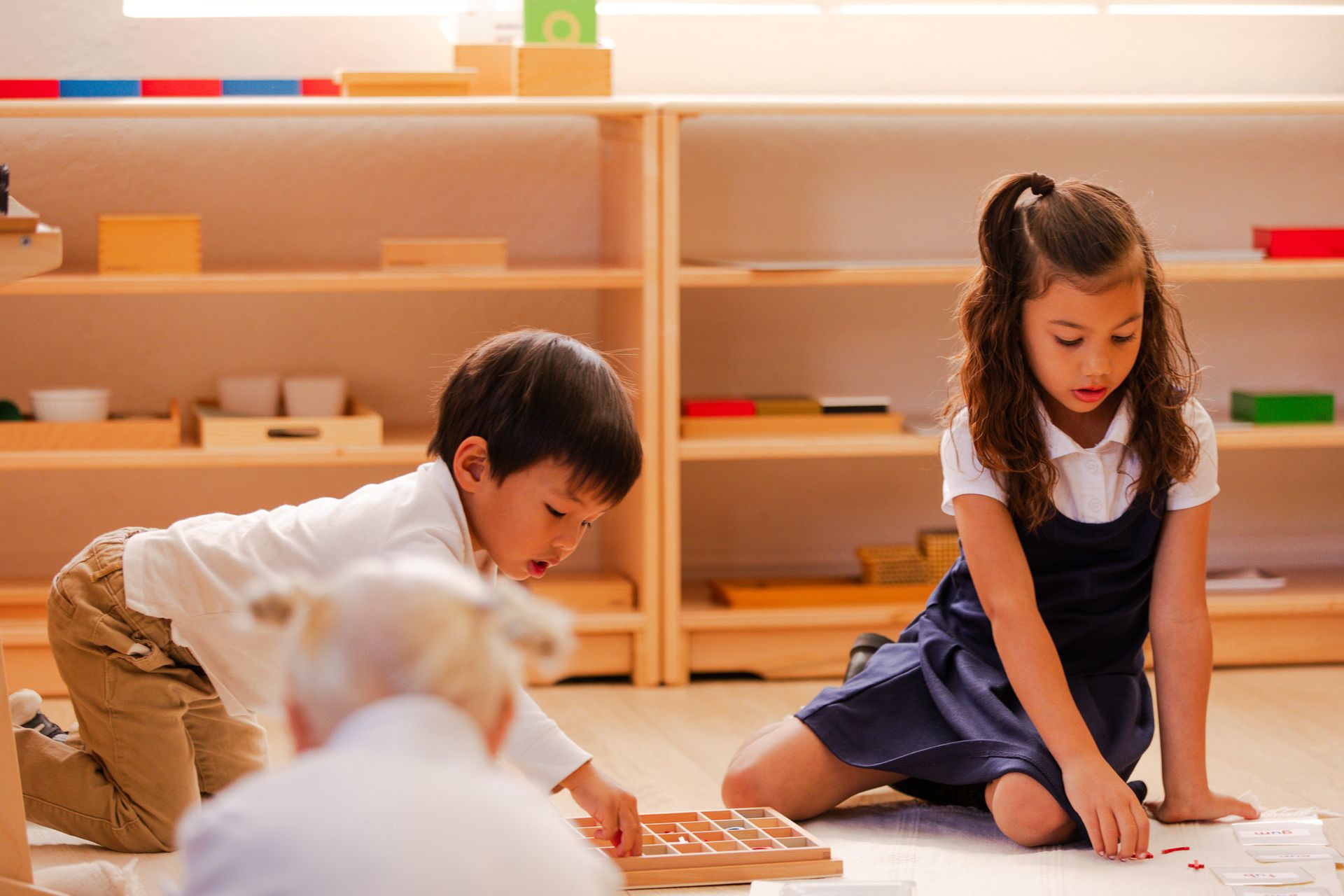
Rather than directing children, our role is to prepare an environment where natural development can flourish. Each shelf, material, and routine in our classrooms is intentional. From Practical Life to Mathematics, the Montessori environment supports intellectual growth while nurturing character—patience, care, responsibility, and joy.

Our guides observe more than they instruct. They study the child, prepare the path, and step back—trusting the child’s inner guide.


A Cosmic Perspective

Dr. Montessori reminded us that education goes beyond academic achievement. It is about understanding our place in a larger story, one of interdependence, responsibility, and gratitude. She referred to this as a cosmic vision: the understanding that each person has a unique role to play in contributing to the harmony of the world.

At CSM, we nurture these seeds of stewardship. We invite children to care for their environment, each other, and the wider community because education is preparation for a life of purpose.


Adaptation: The Work of the Child

Human beings are deeply adaptive, and this capacity begins in early childhood. Through their senses, hands, movement, imagination, and relationships, children actively construct themselves. They are not passive recipients, they are creators.

Montessori identified innate human tendencies that support this development:

  • To orient and explore
  • To create order and seek patterns
  • To imagine, calculate, and reason
  • To repeat and refine through effort
  • To communicate and collaborate
  • To strive toward self-mastery

When these tendencies are supported, children thrive. When obstructed, children still seek to meet their needs—often through frustration or disruption. This is why observation is central to our work.


The Role of the Adult

True Montessori education begins with humility. We ask not, “How do I teach this child?” but rather, “What does this child need to grow?” We observe - not to correct behavior, but to understand it. We prepare so as not to impose lessons, but to offer meaningful work. In this way, the adult becomes an “aid to life,” serving a process far greater than instruction.


Education as a Path of Becoming

At Coastal Sage Montessori, we believe education should nurture the whole human being. It should protect wonder, invite exploration, and honor each child’s unique path. When we align learning with the natural science of human development, children reveal their deepest capacities...concentration, compassion, creativity, and courage.

Montessori is not only a method. It is a way of seeing children with reverence.

We invite you to visit our classrooms, observe the work, and witness what becomes possible when education honors the human spirit. Schedule a tour now!


By Jasmine Parks October 20, 2025
Practical Life activities in Montessori foster independence, confidence, and a sense of belonging as children learn real-life skills through meaningful, hands-on work.
By Jasmine Parks May 23, 2025
Adolescents are in a new stage of development. So, how can the adults in their lives adapt? In Montessori adolescent programs, we open our hearts and minds to what is really happening for adolescents in their growth toward adulthood. We have enormous respect for adolescents and the growth that happens during this stage of life. In many ways, the early adolescent years are parallel to the first years of life. Adolescents are newly emerging adults. They are newborns, and just like newborns, they are gaining a great deal of learning, brain integration, and social/emotional equilibrium. Because what happens during adolescence impacts how our future adults will adapt and contribute to the broader society in adulthood, we are careful to model what it means to be an adult. We work to provide guidance and structure while respecting adolescents’ journey of self-construction. This stage of development is a period of reorganization, and we have the unique opportunity to positively influence and support this transformation. The Montessori Adolescent Environment Montessori adolescent programs vary in structure but typically include: ● Plans of study and work ● Different forms of social organization ● Micro-economy programs ● Work with nature and the land Within these activities, adults serve multiple roles in different settings, such as in the kitchen, through work on the land, in business operations, and more. However, it is essential to remember that the Montessori learning environment belongs to our adolescents. As such, we must ensure students develop concentration and independence through meaningful activities in an attractive and stimulating environment. Creating this prepared environment is a vital piece of the adult’s work! So we work to uphold the following characteristics. ● Designed for self-construction : Adolescents need an environment where their personal development takes priority over just producing a finished product. Whether running a microeconomy business or working on the land, we remember that the product isn’t the primary concern; rather, it’s the adolescent’s development and their self-construction. ● Developmentally appropriate : Activities and experiences should align with where adolescents are in their growth so as to ensure engagement and relevance. ● Supportive of human tendencies : We want the environment to support human tendencies, like orientation, order, association, and exploration, in a way that evolves with students’ age and maturity. This means the space and the work will look different based on what our students experienced during their elementary years! ● Includes materials/activities that provide appropriate challenges and opportunities for independence : Adolescents need access to tools, technology, creative outlets, and real-world applications of their learning, from garden tools to spreadsheets, from theatrical production materials to forms of publication. ● Provides Beauty and Order : While adolescents may not always maintain order, a well-organized and aesthetically pleasing environment still impacts their development and identity formation. Although adolescents experience organization as a convenience, order is necessary to operate in a microcosm of society and when you need to get things done, like cooking a meal for a group. ● Ensures Isolation of difficulty : We need to observe to know if our adolescents can use the tools at their disposal and also to plan for what lessons they need to be successful. Adolescents don’t want to be incompetent. They also don’t want to be ordered about by an adult. They need our side-by-side support. ● Is Scaled in Size : We want workspaces should be adaptable to accommodate the diverse physical and developmental needs of adolescents. Scaling still matters at this level because adolescents can be very different from each other in their development. ● Offers Limited materials : Too much choice can be overwhelming, yet the material needs to be obtainable when the task requires it. We intentionally ensure there isn’t one of everything for everyone because research shows adolescents are more productive when working with a partner. ● Encourages Care (of self, others, and the environment) : This is a beautiful thread in all of Montessori. As our young people approach adulthood, we support them in learning how to take of themselves so that they then have the capacity to take care of people around them and then their community and their planet. Encouraging adolescents to care for themselves, their community, and the world around them fosters responsibility and empathy. The Essential Role of the Adult Adults are an essential part of the prepared environment, acting as facilitators of human development. Our primary responsibilities include: ● Creating Conditions for Growth : Providing experiences that develop social responsibility, justice, and dignity. ● Modeling Respect and Civility : Demonstrating respect for people, living things, community spaces, and social norms. ● Fostering Engagement : Encouraging participation through invitations to work, short presentations, and meaningful activities. ● Encouraging Self-Construction : Allowing adolescents to take ownership of their learning while the adult remains in the background, blending into the work alongside them. The Power of Observation and Patience A fundamental role of the adult is to create conditions that naturally engage adolescents. This requires stepping back from unnecessary praise and criticism and allowing students to recognize their own successes and errors. Learning comes from experience, and we see mistakes as valuable opportunities for growth. Adults must also develop strong observation skills, practicing patience as adolescents navigate their developmental process. Our role is to guide, not dictate, allowing adolescents to take ownership of their education. Ultimately, we must be aware of and sensitive to adolescents' developmental needs and characteristics. We respect their potential and understand adolescents’ need to function in a social context and their drive to become independent young adults. Side-by-Side Work One of the most effective tools for fostering independence is working alongside adolescents. This allows them to: ● Observe real work in action ● Understand their role within a community ● Feel valued for their contributions The process begins with adults modeling tasks, ensuring students understand the necessary skills, tools, safety rules, and quality expectations. Gradually, responsibility shifts to the adolescent, allowing them to take ownership while we observe from a distance. Older students can take on leadership roles, further developing their skills and sense of responsibility. Preparation of the Adult The role of adults in a Montessori adolescent program is built on teamwork, respect, and humility. Adults must collaborate effectively, ensuring that the program serves the community of adolescents rather than personal agendas. By fostering a respectful and engaging learning environment, adults empower adolescents to become independent, confident, and socially responsible individuals. Facilitating adolescent development is a significant challenge requiring deep preparation. Montessori adults must be willing to evolve, accept change, and continually refine their approach based on observation and feedback. Montessori education is powerful for this age group because the adults are constantly exploring how to creatively meet adolescents’ needs, from designing the learning environment to preparing themselves to support these emerging young adults. Curious to learn more about how Montessori supports stages of development in our young people? Schedule a tour!